
Wood Staining & Restoration in Canton, OH
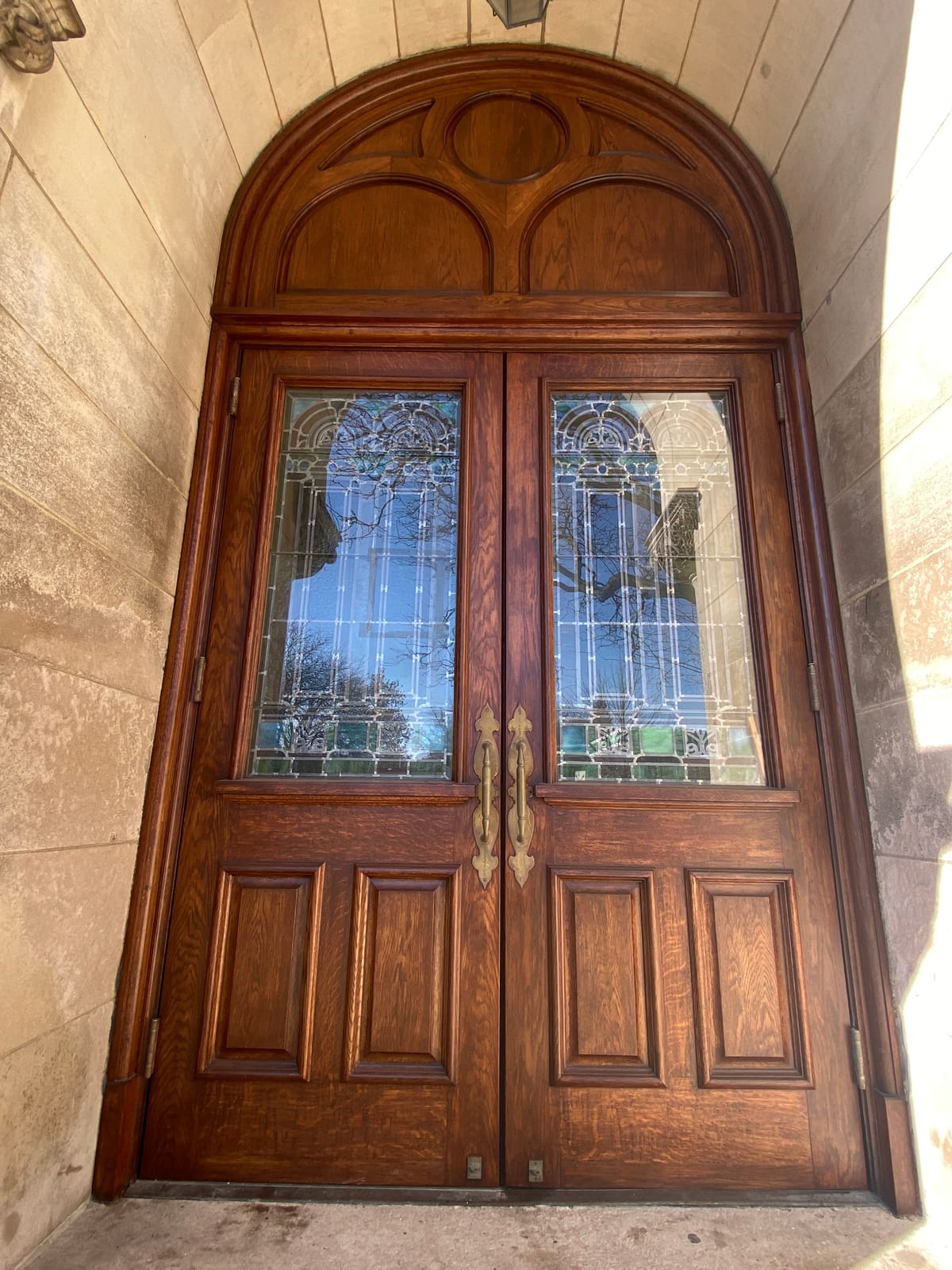
Wood staining and restoration is about bringing original woodwork back rather than covering it: identifying the finish that is actually on the wood, deciding what can be cleaned and revived versus what has to come off, and matching a stain color close enough that a repaired section does not read as a repair. We work this way on church and school millwork and on older downtown Canton interiors where the wood underneath is usually still sound.
Wood staining and restoration is about bringing original woodwork back rather than covering it: identifying the finish that is actually on the wood, deciding what can be cleaned and revived versus what has to come off, and matching a stain color close enough that a repaired section does not read as a repair. We work this way on church and school millwork and on older downtown Canton interiors where the wood underneath is usually still sound.
- Owner: 25+ Years in the Trade
- Est. 2012
- Fully Insured & Workers Comp
- OSHA Trained
- MBE Certified
- EDGE Certified
Signs Your Woodwork Needs Staining or Restoration
Most original woodwork that looks past saving is really just carrying a failed finish over a sound substrate. The signs below tell us which kind of job it is before we touch anything.
What Wood Staining and Restoration Includes
How a Wood Staining and Restoration Job Runs
- 01
Walkthrough
We look at the space or the plans in person or by photo, so the scope is based on the real building, not a guess.
- 02
Scope and bid
You get a written scope and a firm bid before any work starts, priced on the actual square footage and conditions.
- 03
Schedule
We set a start date and a sequence that works around your hours, your tenants, or your school calendar.
- 04
Prep
Surfaces are cleaned, repaired, and masked off before a drop of paint or coating goes down.
- 05
Application
Crews apply the coating or material to spec, with the site kept clean and safe throughout.
- 06
Punch list
We walk the finished space with you and close out anything on the list before we call it done.
- 07
Closeout
You get the final walkthrough, any warranty paperwork, and a clean handoff.
We give you a firm, written bid before any work starts, priced on the real scope, not a guess.
What Affects the Cost of Wood Staining and Restoration
| Factor | Why It Moves the Number |
|---|---|
| What finish is already there | Shellac, lacquer, oil varnish, and polyurethane all respond to different solvents and different stripping methods, and misidentifying the finish is how a piece gets damaged before the real work even starts. |
| Revive versus strip | A finish that is intact but dull or dirty can often be cleaned and refreshed without removing it; a failed or opaque finish has to come off completely, and that difference changes the labor by a large margin. |
| Damage grade under the finish | Surface wear, sun fading, and light water staining are refinishing problems; rot, structural softness, and missing sections are repair or millwork problems first, and the finish only goes on after that work is done. |
| Profile complexity | A flat panel sands and finishes quickly; an arched pediment, carved detail, or a turned spindle takes hand work at every step to protect the crisp edge of the profile. |
| Stain match to existing wood | Matching a new or repaired section to a hundred-year-old piece that has darkened and aged unevenly takes more test coats and sampling than staining new wood on its own. |
| Lead-safe practice on pre-1978 buildings | Older Canton churches, schools, and downtown buildings may carry lead-based finishes under later coats, which requires containment and lead-safe sanding or stripping before any of the finish work starts. |
Wood Staining and Restoration in Canton and Stark County
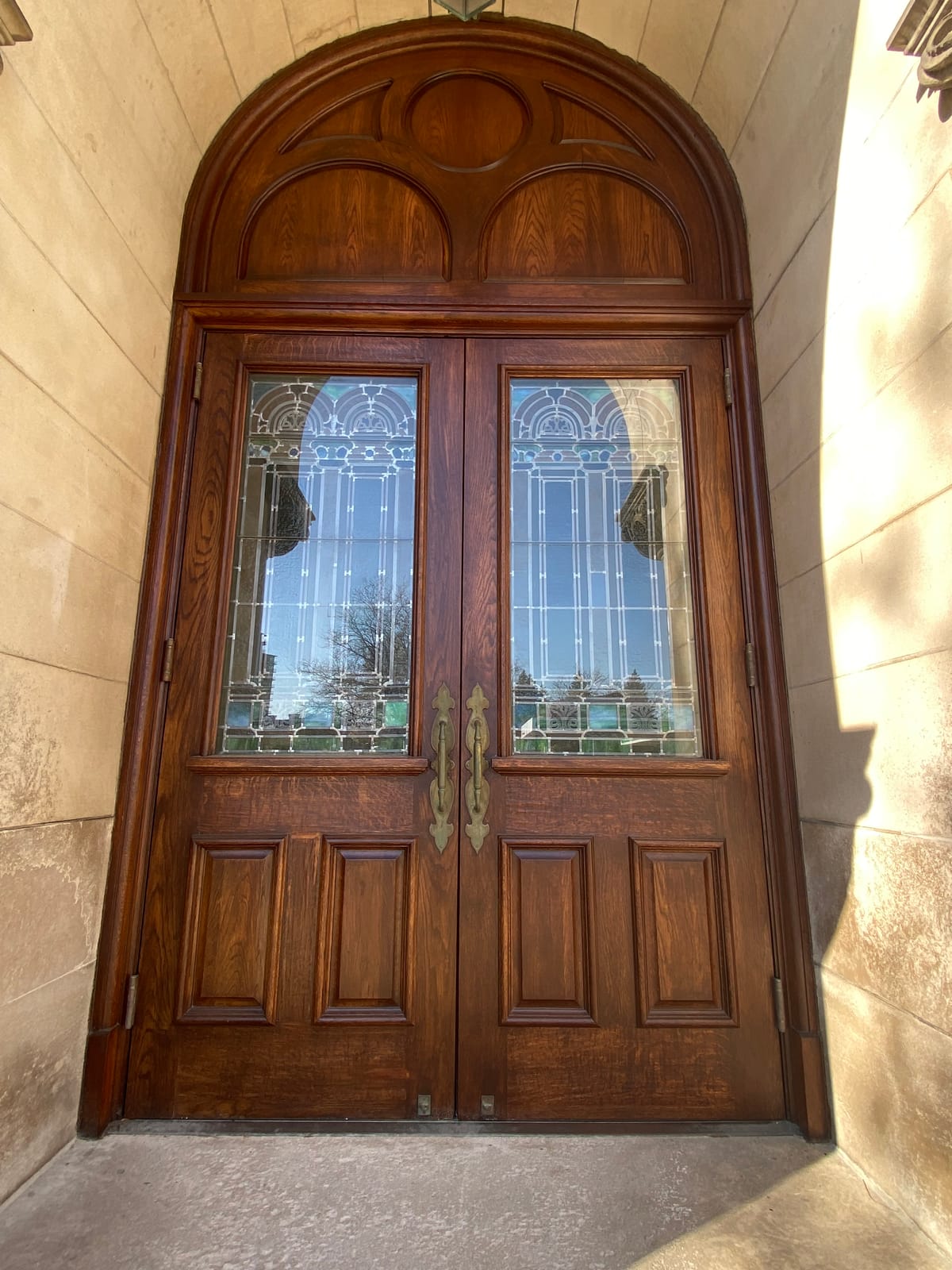
Stark County churches and schools carry more original interior millwork than almost any other building type we work in: pews, altar rail and stage woodwork, door banks, wainscoting, and window trim that has usually never been touched since the building went up. It has also usually never been refinished in any real sense, just cleaned around and painted over when the paint on the walls around it got redone, which is how a church can have original oak pews under a finish that has gone nearly black and opaque. That woodwork gets a finish assessment before anything else, because a shellac or old varnish finish from that era responds to solvent and hand work completely differently than the polyurethane finishes on anything built in the last thirty years.
Downtown Canton’s older interiors, in the Arts District and the blocks around it built through the city’s industrial buildup in the late 1800s and early 1900s, carry original wood storefronts, stair rails, and office trim that a lot of newer finish work does not know how to handle. The instinct on a tenant turnover is to sand it smooth and coat it fast, and aggressive power-sanding is exactly what flattens the crisp edge, or arris, on a moulding profile that took a craftsman real time to cut by hand in the first place. Once that edge is gone it does not come back, which is why we hand-sand original profile work rather than run a belt sander over it just because it is faster.
A church pew, a school handrail, and a courthouse door pull all get touched constantly by hand, and the topcoat and sheen decision on that kind of piece is different from a piece of trim nobody ever touches. A satin or semi-gloss film finish built up in enough coats holds up to that daily contact far better than an oil finish that looks right the day it is applied and wears through at the hand contact points within a school year. That is a decision we make up front, on the piece and how it is actually used, not on how a sample looks under showroom light.
Older Canton neighborhoods closer to downtown, and the churches and schools built alongside them, also carry the highest odds of a lead-based finish under later coats, since most of that building stock predates 1978. Lead Renovation Certified practice governs how that finish gets contained, sanded, or stripped before any restaining happens.
Identifying the Finish, and Reviving It Versus Stripping It
Shellac, lacquer, oil varnish, and modern polyurethane look similar to an untrained eye and behave completely differently under a solvent. Shellac dissolves in denatured alcohol and can often be revived rather than stripped; lacquer responds to its own thinner; oil varnish and polyurethane need a chemical stripper because neither one redissolves once cured. A small test patch in an inconspicuous spot decides which one it is before anything happens to the rest of the piece.
A finish that is intact and just dull under decades of wax and dust gets cleaned and revived, not stripped: the right solvent and a fresh coat of the same finish family, and the piece keeps its original film. A finish that has alligatored, gone cloudy from moisture, or lifted in sheets has already failed and has to come off. Sun-faded wood, water-stained wood, and simply dirty wood are three different problems with three different fixes, and treating one like another wastes the piece and the money spent on it.
Stripping Versus Sanding, and Why Aggressive Sanding Loses the Profile
Chemical stripping removes a failed finish without removing wood, which is why it is the first choice on any original moulding profile, carved detail, or turned piece. A power sander run over an original profile rounds off the crisp arris, the sharp edge where two planes of a moulding meet, that is exactly what makes hand-cut millwork read as old and worth keeping instead of a flat, generic modern profile. That edge does not come back once it is gone, which is why we hand-sand original profile work rather than run a belt sander over it for speed.
Matching New Wood to a Hundred-Year-Old Piece
New wood almost never takes stain the same way old wood does, even the same species. Old-growth lumber is tighter-grained than most wood milled today and has darkened and oxidized with age in ways a stain alone cannot fully replicate. Matching a spliced repair or a new piece to the wood around it takes layered stain coats and test samples checked against the original in real light. On softwoods like pine and fir, a wood conditioner goes on before the stain to control blotching, since those species absorb stain unevenly and raise grain when the stain wets the wood.
Why Canton Buyers Choose Straight Line
Most of what gets called damaged wood is really just a failed finish sitting on top of wood that is still fine, and we would rather prove that before anyone reaches for a saw. - Duane R. Harris, President
Straight Line Painting is a Commercial painting contractor in Canton built on structure, systems and service, insured, OSHA certified, MBE and EDGE certified.
Related Work
Painting
Cabinet and trim refinishing, wood and door restoration, and high-end residential interior and exterior painting.
Read moreDoor refurbishing and restoration
Doors, frames, lockers and partitions restored on site for school and hospital door banks.
Read moreCabinet and trim refinishing
A sprayed finish, not brush, for Canton office and high-end residential millwork.
Read moreHigh-end residential interior painting
Premium interior work with real protection of the home, for Jackson and Plain Township homes.
Read moreReal Projects, Real Buildings
- Affordable Dentures & Implants
- Buffalo Wild Wings
- Blossom Hill Adult Daycare
- Church of The Western Reserve
- University Hospitals Ahuja Medical Center
- AutoZone
- Dollar General
- Dunkin'
Request a Bid
Got it. We're on it.
Your request is in. Our office will follow up to schedule a walkthrough or price it from what you sent.
Wood staining and restoration Questions Canton Buyers Ask
Can damaged wood be saved?
It depends on what kind of damage it is. Surface wear, sun fading, and a failed finish are almost always saveable with cleaning, stripping, and refinishing. Water damage that has cupped or softened the wood can often be dried out and consolidated if it has not gone deep, and a missing profile or a rotted section can sometimes be spliced in by a millworker and matched to the piece around it. Wood that has rotted through, lost its structural integrity, or been eaten out by insects to the point that nothing solid is left to finish is honestly gone, and refinishing over it would only hide a problem that needs to be replaced.
Will refinished wood match the wood next to it?
That is the goal on every restoration job, and it takes test coats and sampling against the existing piece rather than picking a stain color off a fan deck. New wood spliced into an old piece takes extra layering and toning, since new wood never absorbs stain the same way hundred-year-old wood does.
Do you refinish church and school millwork on a schedule around services or classes?
Yes. Church and school woodwork gets scheduled to a break, a slow period, or an off-hours window rather than disrupting services or classes, the same scheduling discipline we bring to any occupied Institutional building.
Is older Canton woodwork likely to have a lead-based finish under it?
Buildings older than 1978, which covers most of downtown Canton’s original Commercial stock and many of the churches and schools we work in, may have a lead-based finish under later coats. We are Lead Renovation Certified and handle containment and disposal accordingly before any sanding or stripping starts.
Ready to Get a Bid?
Tell us about the job and we will schedule around your hours.
Straight Line Painting LLC
1145 High Ave SW, Canton, OH 44707
Monday-Friday, 8:00 AM - 4:00 PM