
Hospital & Healthcare Facility Painting in Canton, OH
Painting a hospital or medical facility means working around patients, staff, and infection control requirements that a normal Commercial job never sees, not clearing a wing and running a crew through it. We work section by section behind sealed barriers, coordinate the schedule with facilities and infection prevention staff, and use cleanable coating systems built for a patient environment.
Painting a hospital or medical facility means working around patients, staff, and infection control requirements that a normal Commercial job never sees, not clearing a wing and running a crew through it. We work section by section behind sealed barriers, coordinate the schedule with facilities and infection prevention staff, and use cleanable coating systems built for a patient environment.
- Owner: 25+ Years in the Trade
- Est. 2012
- Fully Insured & Workers Comp
- OSHA Trained
- MBE Certified
- EDGE Certified
When Hospital and Healthcare Facility Painting Is the Right Call
Healthcare painting comes up on a different schedule than most Commercial work, usually driven by wear, a survey finding, or a renovation phase rather than an owner simply deciding it is time. Here is what puts it on the calendar.
What Hospital and Healthcare Facility Painting Includes
How a Hospital Painting Job Runs on an Occupied Floor
- 01
Walkthrough
We look at the space or the plans in person or by photo, so the scope is based on the real building, not a guess.
- 02
Scope and bid
You get a written scope and a firm bid before any work starts, priced on the actual square footage and conditions.
- 03
Schedule
We set a start date and a sequence that works around your hours, your tenants, or your school calendar.
- 04
Prep
Surfaces are cleaned, repaired, and masked off before a drop of paint or coating goes down.
- 05
Application
Crews apply the coating or material to spec, with the site kept clean and safe throughout.
- 06
Punch list
We walk the finished space with you and close out anything on the list before we call it done.
- 07
Closeout
You get the final walkthrough, any warranty paperwork, and a clean handoff.
We give you a firm, written bid before any work starts, priced on the real scope, not a guess.
What Affects the Cost of Hospital and Healthcare Facility Painting
| Factor | Why It Moves the Number |
|---|---|
| Occupied vs. vacant wing | Painting around patients, staff, and active clinical use means barrier setup, daily teardown, and phased sequencing that an empty shell space does not require. |
| Containment and infection control requirements | The level of barrier construction and dust control set by facilities and infection prevention staff, from simple containment to a stricter isolation-adjacent setup, changes labor and material cost directly. |
| Coating system | A scrubbable, cleanable coating rated for disinfectant wipe-down costs more than standard Commercial paint, and the spec differs between a patient room, a corridor, and a back-of-house utility area. |
| Substrate condition | CMU corridor and stairwell walls need block filler and high-build primer before topcoat, while drywall in a newer wing may only need standard prep. |
| Off-hours or overnight scheduling | Working nights or weekends to stay clear of daytime clinical activity adds labor cost over a standard weekday schedule. |
| Corridor and egress constraints | Maintaining required clearance width through a work zone can limit how much of a corridor is under containment at once, which extends the sequencing timeline. |
| Impact-resistant wall protection scope | Adding or replacing corner guards and wall protection in high-traffic corridors is a separate line from the paint scope and depends on how much of the corridor needs it. |
Hospital and Healthcare facility painting, occupied buildings in Canton and Stark County
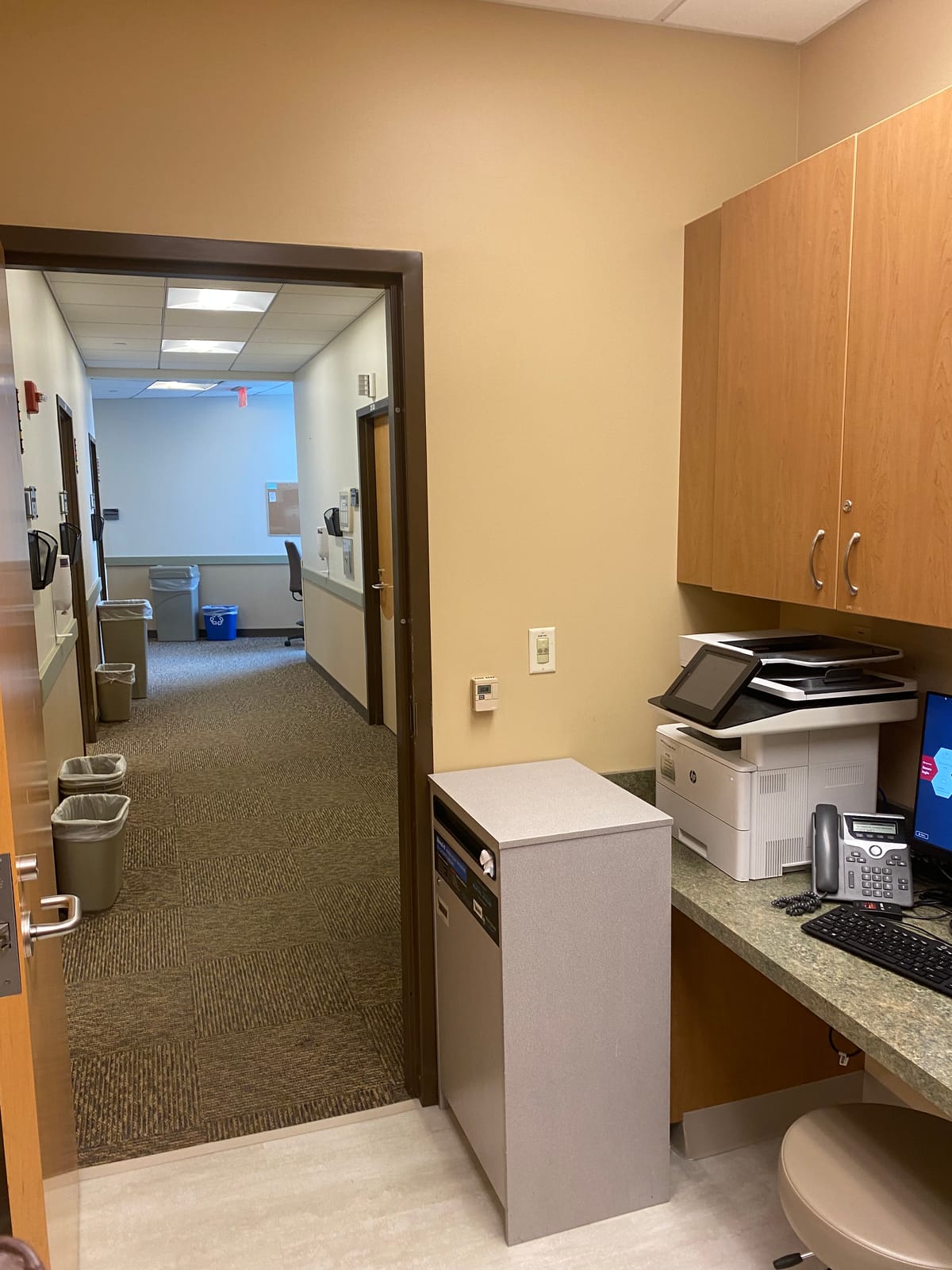
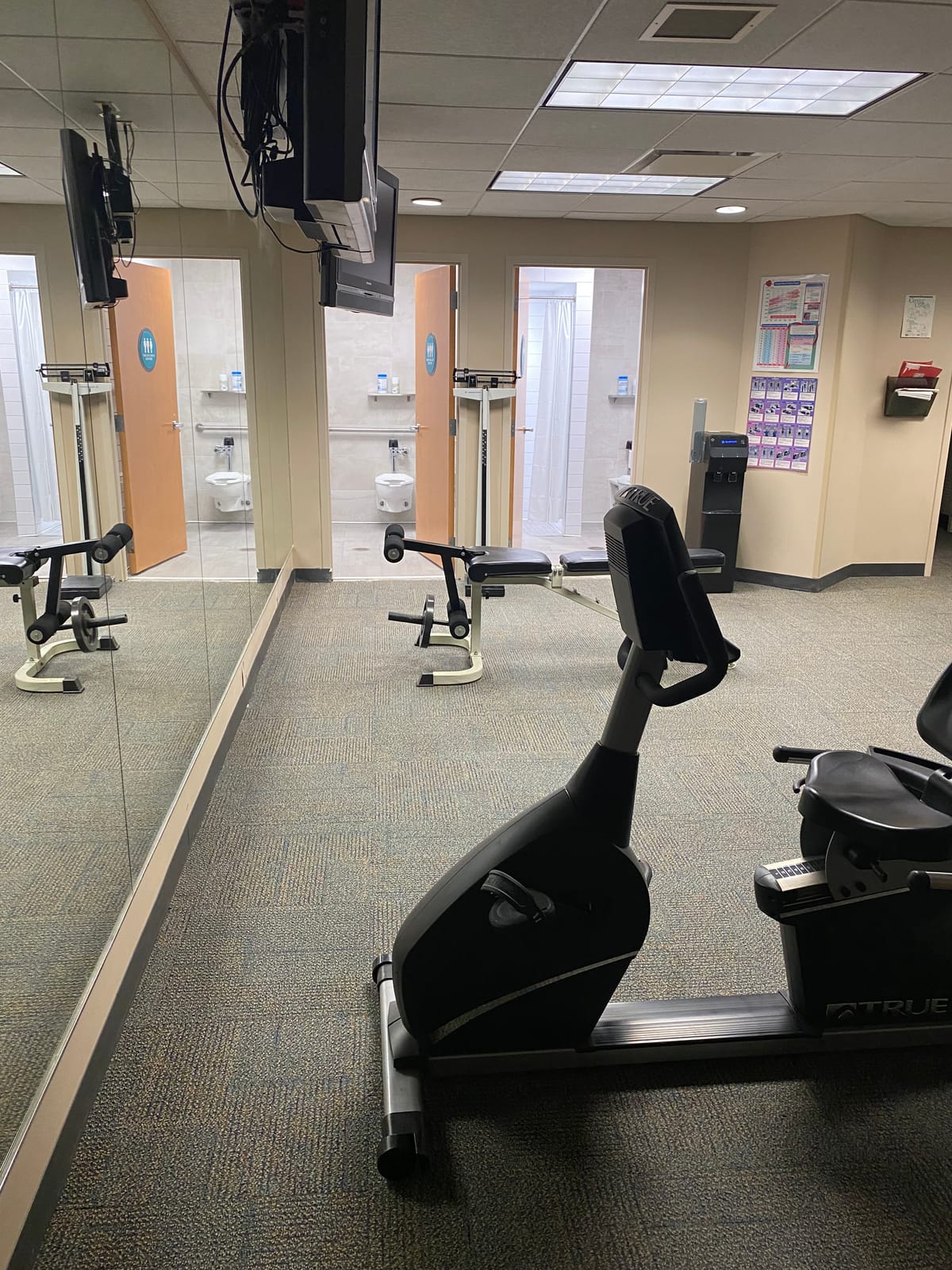
Healthcare work in Stark County does not run like a retail or office repaint, and the difference shows up before the first drop cloth goes down. We have worked inside occupied hospital space at University Hospitals Ahuja Medical Center and at a second University Hospitals facility, both times with patients and staff already using the building around us, not a wing cleared out for the crew. That means the walkthrough covers more than square footage: which doors stay unlocked for clinical staff, which corridor cannot drop below its required width, and which hours the unit can tolerate any noise or odor at all.
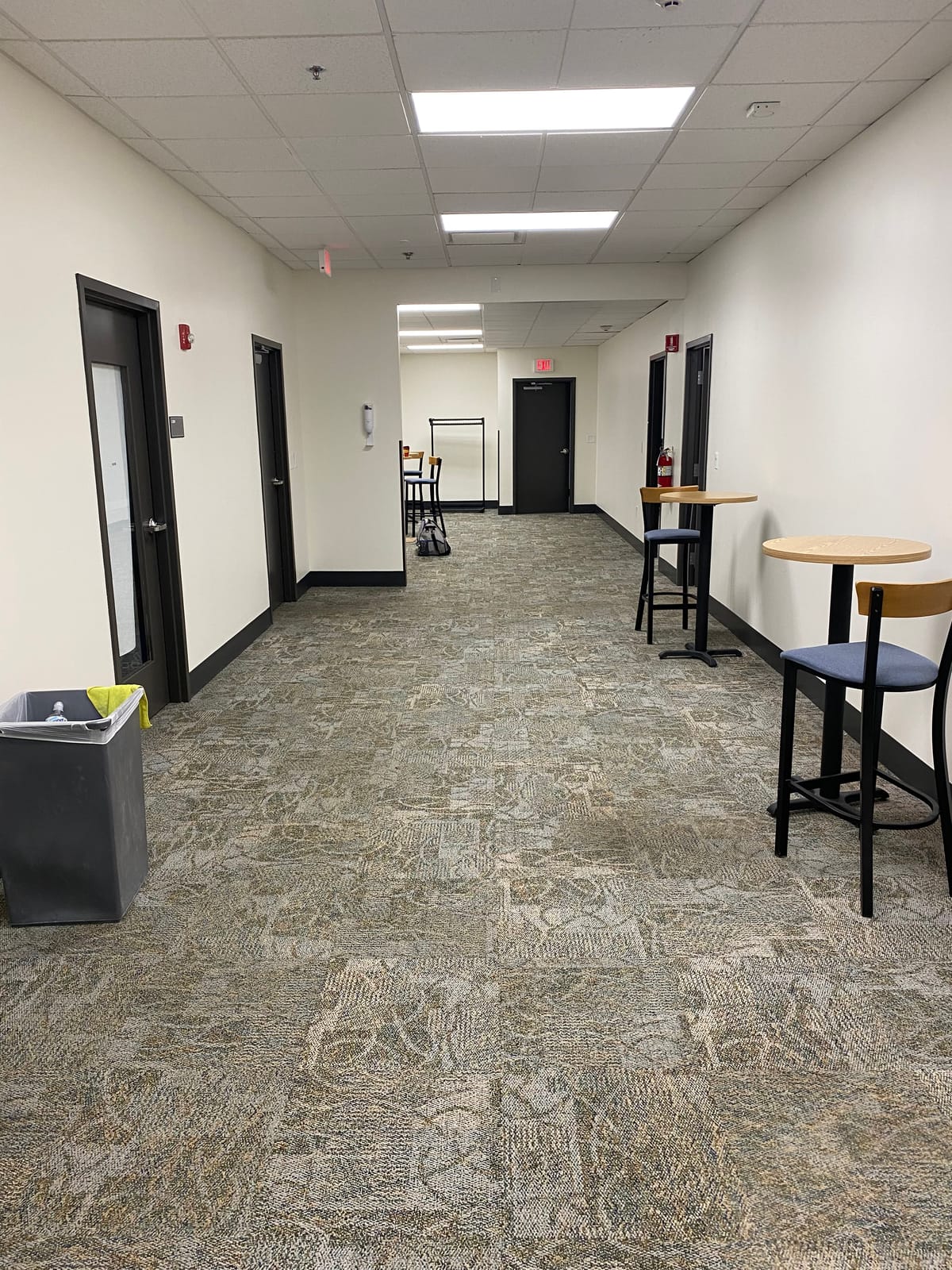
Occupied-wing work in a hospital comes down to containment discipline. A section gets sealed off with solid barriers, not plastic sheeting alone, dust and odor stay inside that section, and the barrier comes down and the floor gets cleaned before the shift ends, every day, so a corridor or room can go back into clinical use overnight if the schedule calls for it. We do not leave a wing half-painted and open over a weekend. That daily reset is slower than running a job straight through, and it is the only way to work a floor that patients are still on.
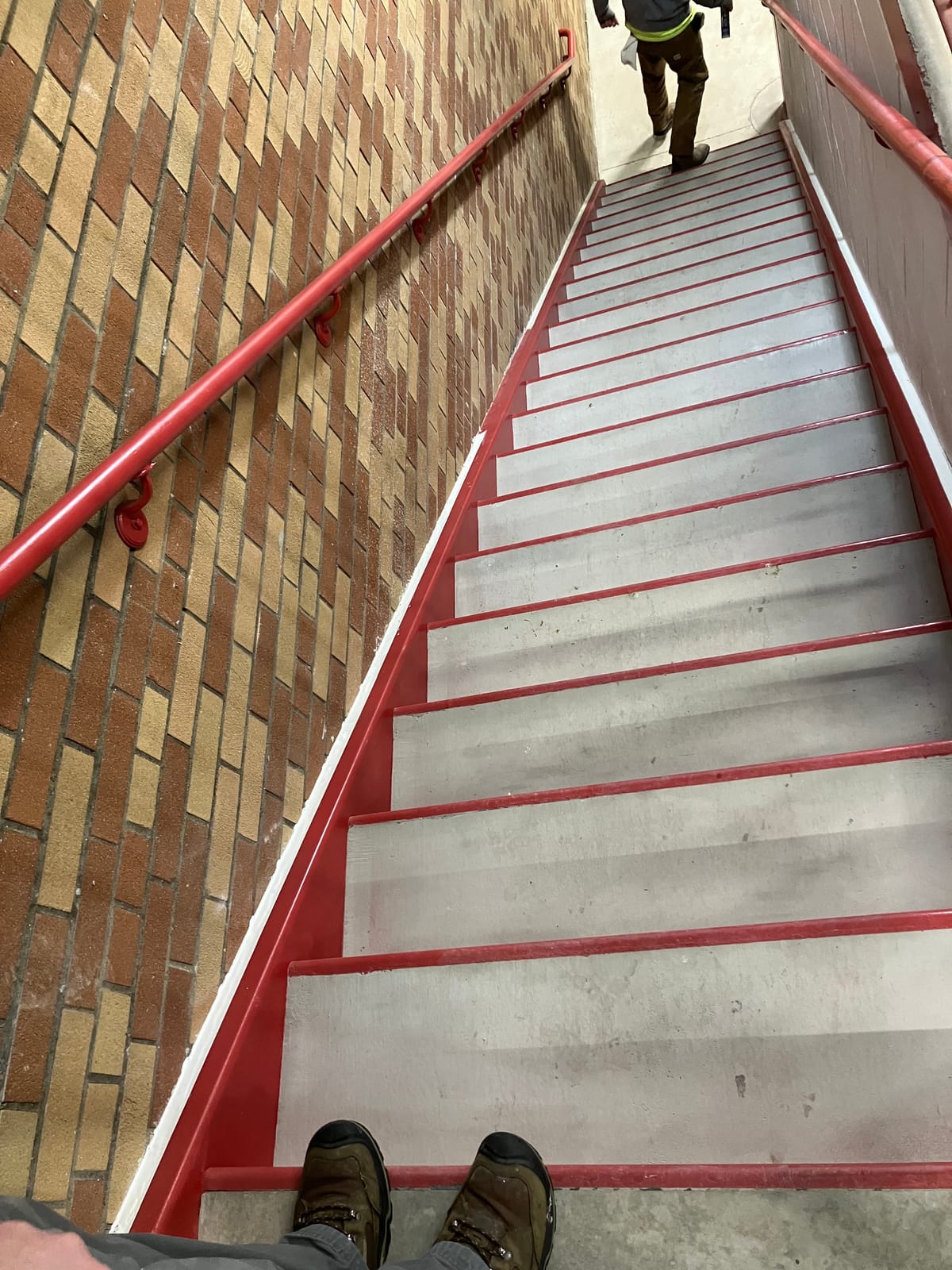
CMU block walls show up constantly in Stark County's older hospital and Healthcare construction, in stairwells, back corridors, and mechanical-adjacent spaces built decades before the finish spaces around them were renovated. Block filler and a high-build primer go on before any topcoat, because a single coat over unfilled block reads through at every joint and fails faster under the repeated cleaning a clinical corridor gets. That prep step gets skipped by crews used to drywall, and it is the first thing that shows on a callback in a hospital hallway.
None of this runs on our schedule alone. Every Healthcare job we take on gets planned around the facilities team and infection prevention staff first, badging and site access requirements second, and the coating spec third. We are not certified in infection control risk assessment and we do not represent ourselves as such. What we bring is the process discipline an occupied clinical floor requires: containment that holds, dust treated as a real hazard rather than a nuisance, and a crew that leaves the space cleaner at the end of every shift than a normal Commercial job would.
Dust Control on a Clinical Floor
On a normal Commercial job, dust is a cleanup problem. On an occupied hospital floor, it is a clinical one. Sanding, scraping, and cutting-in generate particulate that has to stay inside the containment barrier and off any surface patients or staff will touch, which changes how we mask, how we sand, and how often we clean during the shift rather than only at the end of it.
We coordinate that level of control with whatever the facility's infection prevention team requires for the specific unit, since a med-surg corridor and a lobby renovation do not carry the same risk. We do not hold an infection-control credential and do not claim one. What we bring to that coordination is a barrier and cleanup discipline built for occupied clinical work.
Why Canton Buyers Choose Straight Line
Straight Line Painting is a Commercial painting contractor in Canton built on structure, systems and service, insured, OSHA certified, MBE and EDGE certified.
Related Work
Institutional Painting
Schools, churches and occupied hospitals, scheduled around calendars and shifts, MBE and EDGE certified.
Read moreLow-VOC painting for occupied offices, medical, and restaurant spaces
Odor and re-occupancy timing managed for occupied Canton offices, medical suites and restaurants.
Read moreNight, weekend, and phased-shift painting for occupied buildings
A detailed off-hours scheduling promise for Stark County retail, restaurant and office operating hours.
Read moreCommercial repainting
Repainting a building that is still open for business, scheduled around Belden Village and Tuscarawas retail tenant turnover.
Read moreReal Projects, Real Buildings
- Affordable Dentures & Implants
- Buffalo Wild Wings
- Blossom Hill Adult Daycare
- Church of The Western Reserve
- University Hospitals Ahuja Medical Center
- AutoZone
- Dollar General
- Dunkin'
Request a Bid
Got it. We're on it.
Your request is in. Our office will follow up to schedule a walkthrough or price it from what you sent.
Hospital and Healthcare facility painting, occupied buildings Questions Canton Buyers Ask
How do you paint an occupied patient floor?
We work one section at a time behind solid containment barriers, keep dust and odor inside that section, and tear the barrier down and clean the floor at the end of every shift so the space can return to clinical use. Sequencing, badging, and daily hours are planned with the facility's team before work starts, not worked out on site.
Are you an ICRA-certified contractor?
No, and we will not tell you otherwise. We are OSHA certified and follow the containment, dust control, and coordination process a facility's infection prevention staff requires, but we do not hold an infection-control credential and do not represent ourselves as certified in one.
Can you work in a hospital corridor without reducing exit width?
Yes, that is a fixed constraint on every hospital job, not a preference. Containment barriers are set to maintain the required corridor and egress clearance at all times, which sometimes means working a shorter stretch of corridor at once rather than sealing off a longer run in one pass.
What coating do you use in patient rooms and corridors?
Scrubbable, cleanable coating systems rated for repeated disinfectant wipe-down, which is a different spec than standard Commercial paint. On older CMU corridor walls, that coating goes over a block filler and high-build primer so the finish holds up under cleaning rather than failing at the joints.
Have you painted in occupied hospitals in Stark County or Northeast Ohio?
Yes. We have worked inside occupied space at University Hospitals Ahuja Medical Center and at a second University Hospitals facility, in both cases with patients and staff already using the building around the containment barriers, not a wing cleared out ahead of time.
Does hospital painting cost more than a standard Commercial repaint?
Usually, yes. Containment setup and daily teardown, cleanable coating systems, and phased work around an occupied schedule all add labor and material cost that an empty Commercial space does not carry. We name those factors in the written bid rather than folding them into a flat number.
Can you work nights or weekends in a Healthcare facility?
Yes, off-hours scheduling is common on hospital work, and we plan it around the unit's actual quiet hours rather than a fixed overnight block. It is priced as a factor in the bid, since night and weekend labor costs more than a standard weekday schedule.
Do your crews need to badge in or pass a background check to work in a hospital?
Most facilities require some form of badging, site orientation, or background check before a crew can access clinical space, and we build that requirement into the schedule as part of mobilization rather than treating it as a surprise once the job starts.
Ready to Get a Bid?
Tell us about the job and we will schedule around your hours.
Straight Line Painting LLC
1145 High Ave SW, Canton, OH 44707
Monday-Friday, 8:00 AM - 4:00 PM