
Concrete Staining in Canton, OH
Straight Line Painting stains and seals interior concrete for showrooms, lobbies, and retail fit-outs across Canton and Stark County, using acid or reactive stains and water-based dyes to turn a plain slab into a finished floor rather than a protected one. The right process, and the right sheen, depends on your slab's own history and how the space is used, and we do not quote a color off a chip card without a sample panel on your actual concrete first.
Straight Line Painting stains and seals interior concrete for showrooms, lobbies, and retail fit-outs across Canton and Stark County, using acid or reactive stains and water-based dyes to turn a plain slab into a finished floor rather than a protected one. The right process, and the right sheen, depends on your slab's own history and how the space is used, and we do not quote a color off a chip card without a sample panel on your actual concrete first.
- Owner: 25+ Years in the Trade
- Est. 2012
- Fully Insured & Workers Comp
- OSHA Trained
- MBE Certified
- EDGE Certified
When Concrete Staining Is the Right Call
Staining is a finish decision, not a protection decision. It fits spaces where the concrete itself is meant to be seen and where the slab is in decent enough shape to become the finished floor rather than something to cover over.
What Concrete Staining and Sealing Includes
How a Concrete Staining Job Runs
- 01
Walkthrough
We look at the space or the plans in person or by photo, so the scope is based on the real building, not a guess.
- 02
Scope and bid
You get a written scope and a firm bid before any work starts, priced on the actual square footage and conditions.
- 03
Schedule
We set a start date and a sequence that works around your hours, your tenants, or your school calendar.
- 04
Prep
Surfaces are cleaned, repaired, and masked off before a drop of paint or coating goes down.
- 05
Application
Crews apply the coating or material to spec, with the site kept clean and safe throughout.
- 06
Punch list
We walk the finished space with you and close out anything on the list before we call it done.
- 07
Closeout
You get the final walkthrough, any warranty paperwork, and a clean handoff.
We give you a firm, written bid before any work starts, priced on the real scope, not a guess.
What Affects the Cost of Concrete Staining
| Factor | Why It Moves the Number |
|---|---|
| Slab condition | A clean, sound slab with minor cosmetic issues costs less to prep than one carrying old adhesive, deep patches, or spalling that has to be addressed before stain will take evenly. |
| Stain type | A reactive acid stain and a water-based dye are different material and labor propositions, and the choice depends on the look you want, not a default. |
| Color complexity | A single-color wash costs less than a multi-color, layered, or faux-finish treatment that builds depth through several passes. |
| Square footage and layout | Open floor plates move faster per square foot than a space broken up by fixtures, columns, or tight cut-in areas. |
| Sealer system and sheen | Epoxy, polyurethane, and penetrating sealers are priced and applied differently, and a high-gloss build-up takes more coats than a matte, low-sheen finish. |
| Occupied vs. empty space | A retail space or restaurant staying open through the work adds phasing and off-hours labor a vacant fit-out does not carry. |
| Existing floor covering removal | A slab still carrying old tile mastic, carpet adhesive, or a prior coating needs that removed before staining can start, which is its own line item. |
Concrete Staining in Canton and Stark County
Canton's Arts District and the blocks of downtown around it are built on older Commercial stock, brick storefronts and mixed-use buildings with slabs that were poured for a use that has nothing to do with a gallery opening or a restaurant that leases the space today. That history is exactly what makes stained concrete work for this kind of tenant: a slab that has taken decades of foot traffic, old fixture anchors, and prior floor coverings has a texture and a patina a poured-yesterday warehouse floor does not, and a reactive stain reads that history back as color rather than something to disguise.
A gallery, a restaurant build-out, or a boutique retail fit-out downtown is a different buyer than a plant manager specifying an epoxy system for forklift traffic. The decision here is aesthetic first, driven by what the space is supposed to feel like to a customer walking in off the sidewalk, and the concrete itself, with its saw cuts, old anchor bolts, and uneven trowel burnish, becomes part of that look rather than a defect to grind flat and forget. We tell every client that upfront: staining does not hide a slab's history, it puts it on display, and the sample panel step exists so nobody signs off on a color imagining a finish their actual floor cannot deliver.
Winter matters here in a way it would not in a warmer climate. A downtown Canton storefront or lobby takes road salt and wet grit off the sidewalk for close to half the year, which is a real slip-resistance and maintenance conversation at the entry, not a cosmetic footnote. We build slip-resistant additive into the sealer at entrances and other wet-prone transitions, and we talk through recoat frequency on those same traffic lanes upfront, since a stained and sealed floor in a heavy-traffic entry needs a sealer refresh well before the rest of the room does.
Older downtown buildings also carry slab surprises you only find once prep starts, an old tile mastic line, a filled-in trench, a patch from a mechanical repair decades ago. None of that rules out staining, but it does mean a downtown retail or restaurant fit-out gets evaluated in person before we quote a finish, not priced off a floor plan alone.
Acid Stain vs. Water-Based Dye
An acid or reactive stain is a chemical reaction, not a coating. It reacts with the lime in the concrete itself, and the color that results depends on your slab's own mineral content, age, and finish, which is why two acid-stained floors from the same product never look quite the same and why the same floor cannot be perfectly repeated if a section is ever patched. The result is a mottled, variegated, marbled look that reads as natural stone rather than a flat, painted color.
A water-based dye sits closer to the surface instead of reacting with the slab chemically, which gives more predictable, consistent color and a much wider color range, including colors a reactive stain cannot produce at all. It is the better choice when the design calls for a specific, repeatable color rather than a one-of-a-kind variegated pattern, and it is often the more practical choice on a slab where reactive stain's unpredictability is a risk the client is not willing to take on a signature space.
Why Canton Buyers Choose Straight Line
A sample panel on your actual slab is not an upsell, it is the only honest way to show a client what their own concrete will do with a given stain. Chip cards are made from someone else's floor, not yours. - Duane R. Harris, President
Straight Line Painting is a Commercial painting contractor in Canton built on structure, systems and service, insured, OSHA certified, MBE and EDGE certified.
Related Work
Flooring Contractor
Epoxy and polyaspartic floor coatings, concrete staining and OSHA-compliant line striping for warehouses and plants.
Read moreEpoxy floor coatings
Slab prep is the job, with systems chosen by use case for Stark County kitchens, warehouses and plants.
Read moreWarehouse and Industrial floor coatings
Heavy-traffic systems for chemical and thermal exposure across I-77 and US-30 distribution and plant floors.
Read moreHigh-end residential interior painting
Premium interior work with real protection of the home, for Jackson and Plain Township homes.
Read moreReal Projects, Real Buildings
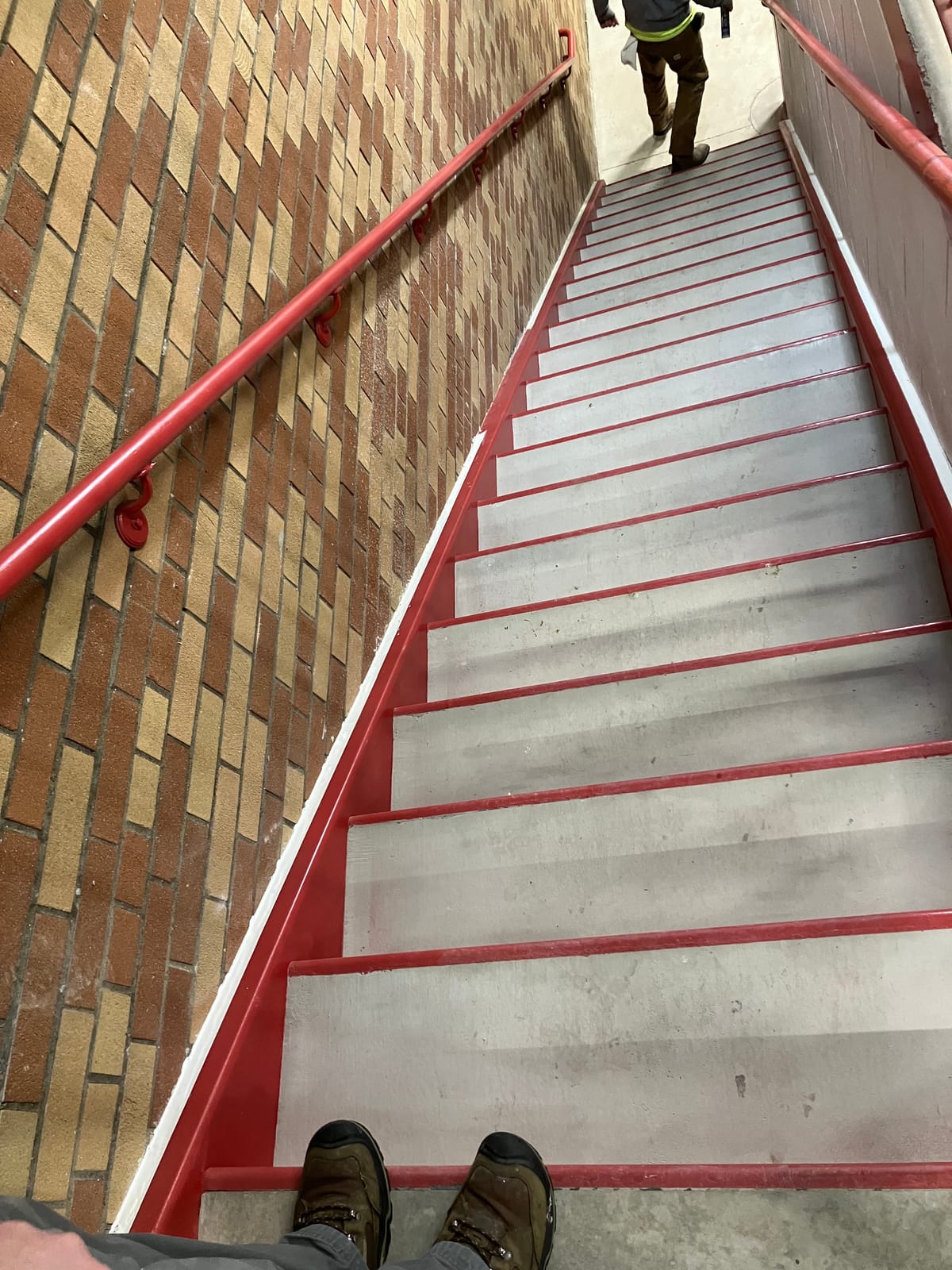
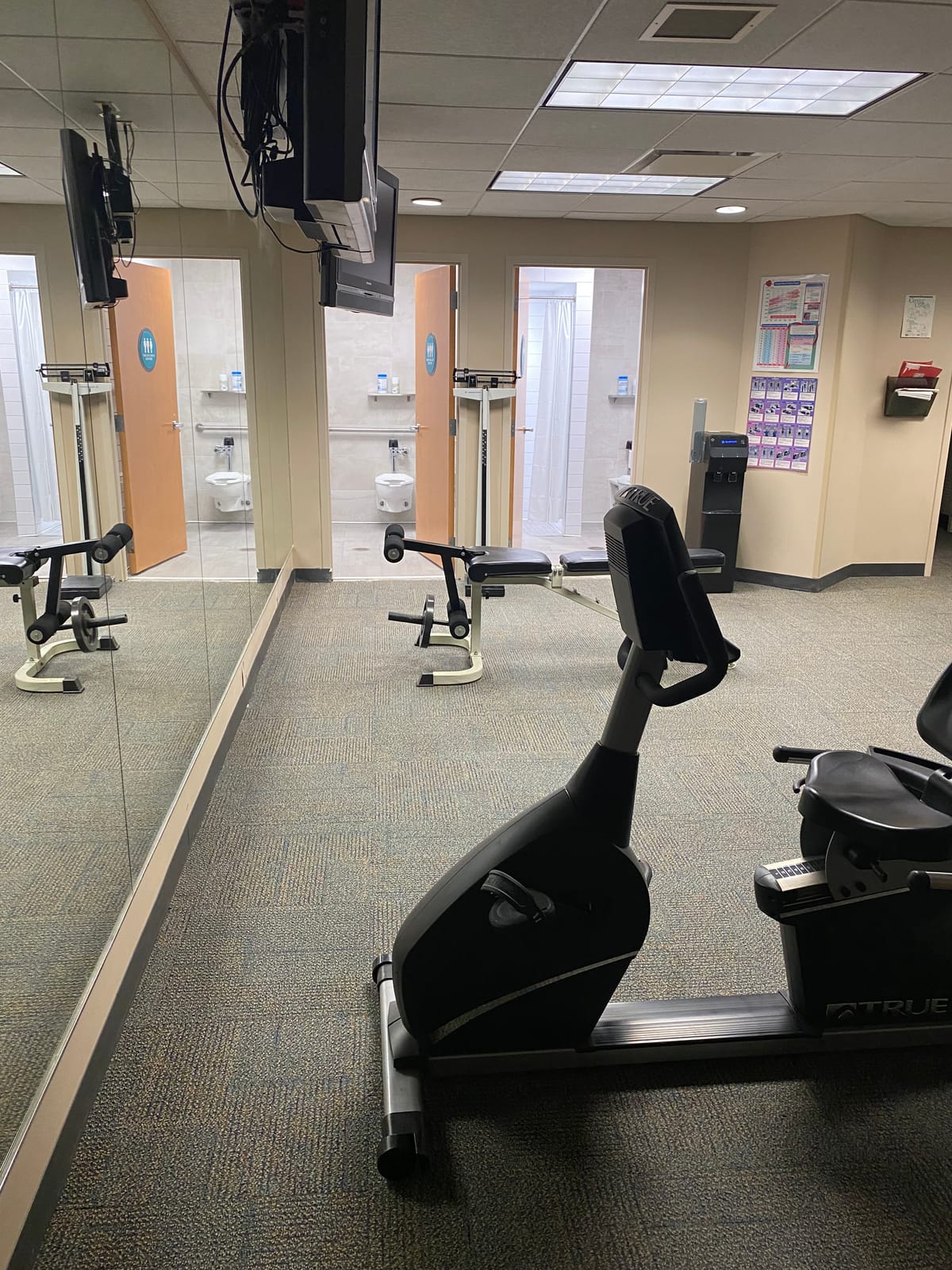
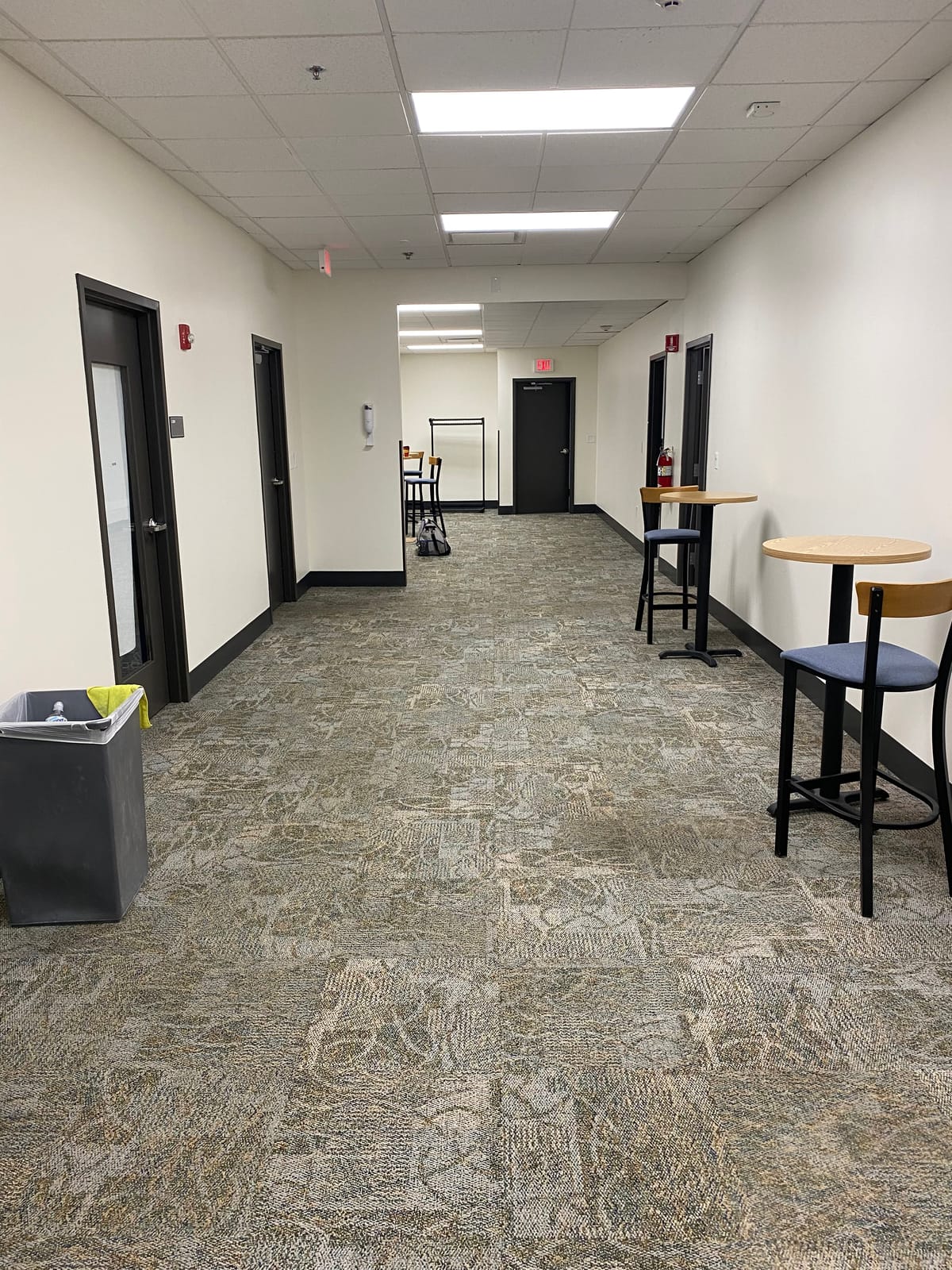
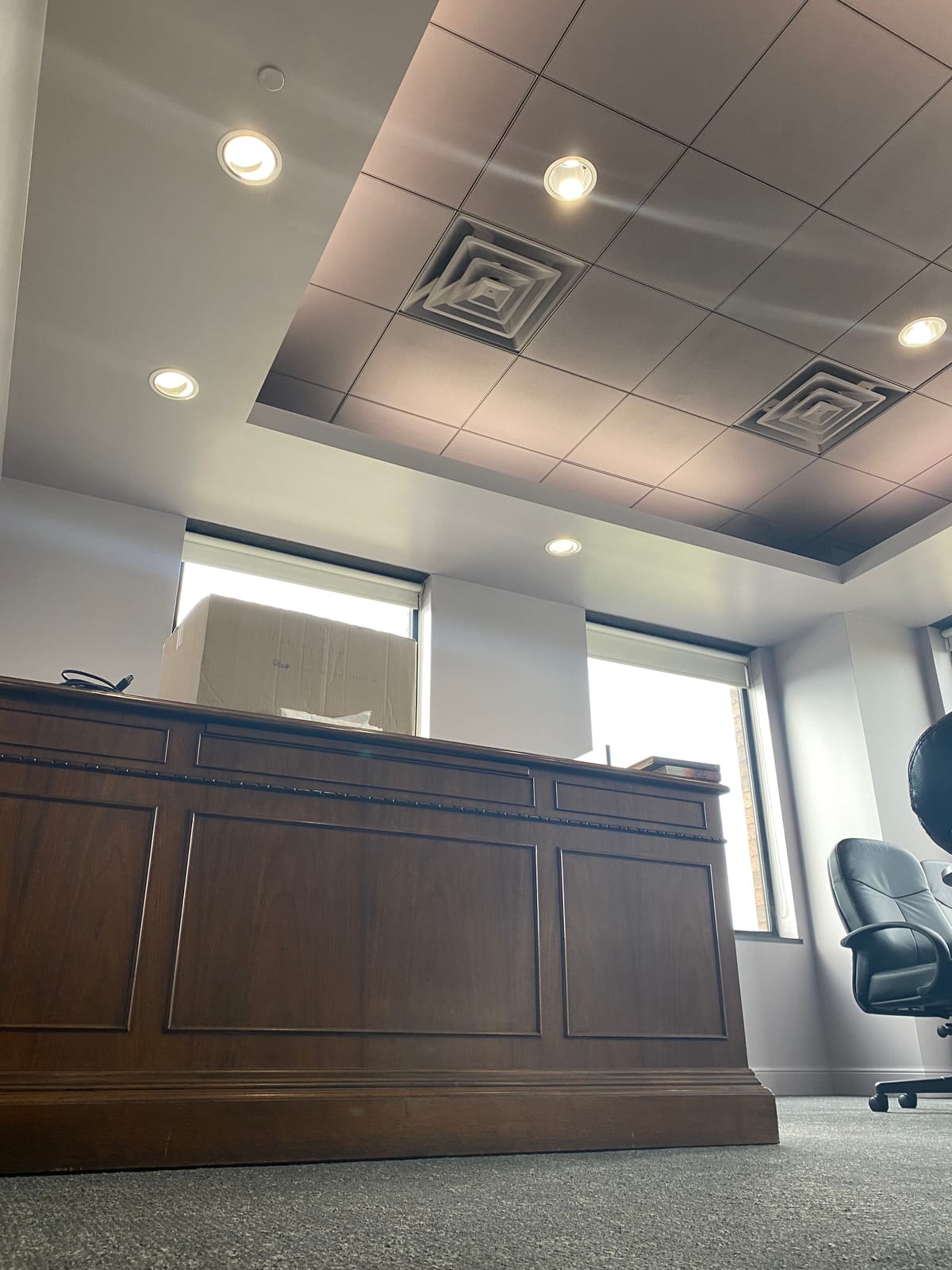
- Affordable Dentures & Implants
- Buffalo Wild Wings
- Blossom Hill Adult Daycare
- Church of The Western Reserve
- University Hospitals Ahuja Medical Center
- AutoZone
- Dollar General
- Dunkin'
Request a Bid
Got it. We're on it.
Your request is in. Our office will follow up to schedule a walkthrough or price it from what you sent.
Concrete staining Questions Canton Buyers Ask
Stained concrete or polished concrete?
They are genuinely different processes, and most buyers assume they are the same thing. Staining adds color plus a sealer that sits on top of the slab; polishing is progressive mechanical grinding and densifying that makes the slab itself, ground and honed in stages, the finished surface with no applied color layer. Staining suits a space that wants color and depth from a slab with real character, an older downtown building or a design that calls for a specific palette. Polishing suits a space that wants a clean, uniform, high-reflectance look and a harder-wearing surface with less ongoing sealer maintenance, and honestly, if your slab is in rough shape or the design calls for a neutral, consistent surface rather than color, polishing is often the better answer than fighting a slab into a stain job it was never a good candidate for.
Can you match a specific color from a sample or a chip card?
Not exactly, and we say that upfront rather than overpromise it. A reactive acid stain reacts with your slab's own mineral content, so the same product can look different on two different floors, and a chip card was made from someone else's concrete, not yours. A water-based dye gets you closer to a predictable, repeatable color if a specific shade matters more than a natural, variegated look. Either way, we run a sample panel on your actual slab before any color decision is final.
Will old patches, saw cuts, or adhesive residue show through a stained finish?
Yes, and on most jobs that is the point rather than the problem. Stain reacts with or sits over whatever is actually in the slab, so old saw cuts, control joints, patch repairs, and residual adhesive lines usually read through as texture and variation in the finished color. If a specific area needs to be minimized rather than featured, we address it in prep, but staining is not a process that fully erases a slab's history.
How slip-resistant is a stained and sealed floor at an entrance?
A sealer alone, especially a higher-gloss one, can get slick when wet, which matters at a Canton entry that takes salt and grit off the sidewalk for a good chunk of the year. We build a slip-resistant additive into the sealer at entrances and other wet-prone transition areas rather than applying the same sheen and texture throughout the whole floor.
How often does a stained concrete floor need to be resealed?
It depends on traffic, not on a fixed schedule. A traffic lane at an entry or a busy aisle wears its sealer faster than a low-traffic corner of the same room, and a heavy-traffic retail or restaurant floor typically needs that lane recoated before the rest of the space shows any wear. We talk through recoat frequency by area, not as one number for the whole floor, when we scope the job.
Ready to Get a Bid?
Tell us about the job and we will schedule around your hours.
Straight Line Painting LLC
1145 High Ave SW, Canton, OH 44707
Monday-Friday, 8:00 AM - 4:00 PM